
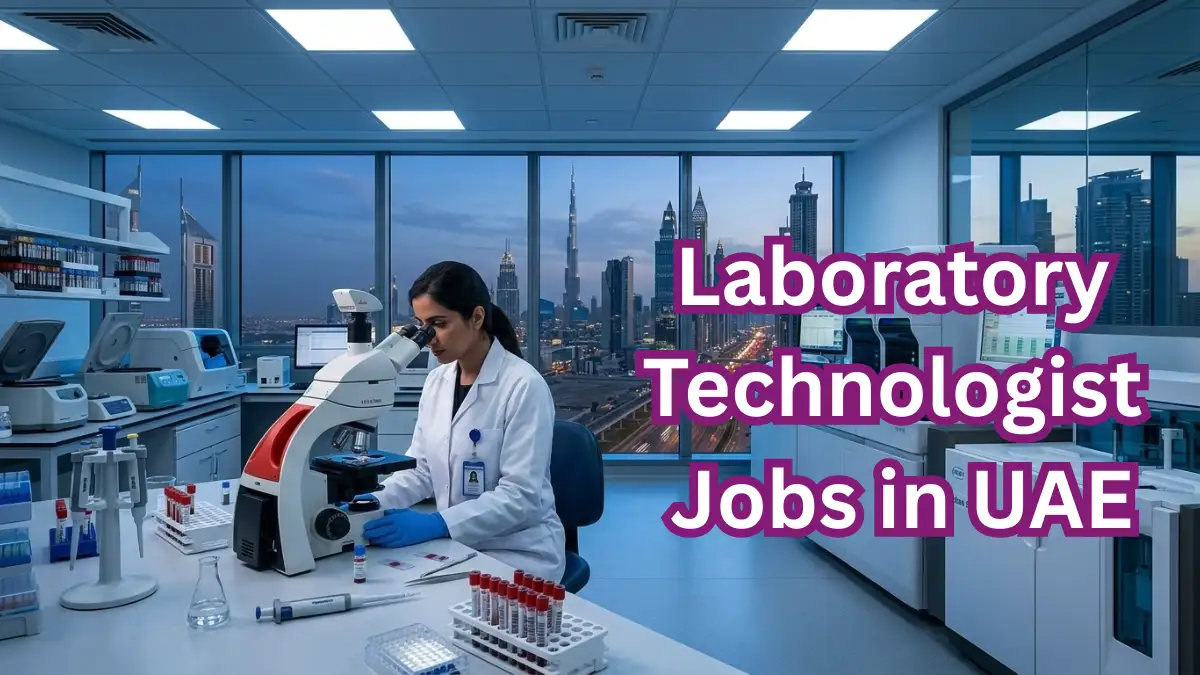
The UAE’s healthcare sector is expanding at a pace few countries can match and right at the heart of this growth is a quiet but critical profession that’s suddenly in very high demand. Laboratory technologists across the Emirates are finding themselves in one of the most promising job markets in years, with new hospitals, diagnostic centers, and research facilities opening their doors from Abu Dhabi to Ras Al Khaimah.
If you’ve been eyeing a lab tech role in the UAE whether you’re a fresh graduate or an experienced professional this is probably the best time to make your move.
Why the UAE Needs More Lab Technologists Right Now
The country’s Vision 2030 healthcare transformation is real and it’s creating thousands of positions that simply didn’t exist five years ago. Dubai Health Authority (DHA) and Abu Dhabi Health Services (SEHA) have both ramped up hiring significantly, particularly for clinical laboratory staff.
Beyond government hospitals, private diagnostic chains, specialized clinics, and research institutes are actively recruiting. Molecular biology, clinical chemistry, hematology, microbiology — virtually every laboratory specialty is seeing fresh openings.
The demand is simple: more patients, more tests, more results needed faster than ever.
What Does a Laboratory Technologist Actually Do in the UAE?
This isn’t a desk job. Every day looks different, and the work genuinely matters.
In a typical UAE hospital or diagnostic lab, you’d be:
- Collecting and processing blood, urine, tissue, and other biological samples
- Running tests on advanced analyzers and interpreting results
- Maintaining and calibrating laboratory equipment
- Ensuring quality control protocols are strictly followed
- Collaborating with doctors and specialists to support patient diagnosis
- Documenting findings accurately within hospital information systems
In larger facilities, you may specialize focusing entirely on histopathology, blood banking, or molecular diagnostics, for example.
Qualifications That UAE Employers Actually Want
Getting hired isn’t just about having a degree. UAE healthcare employers are specific about what they’re looking for.
Educational Background
A Bachelor’s degree in Medical Laboratory Science, Clinical Laboratory Technology, or a closely related biomedical field is the standard minimum. Some roles — especially in research or reference labs — prefer candidates with a postgraduate qualification.
Licensing Requirements
This is where many applicants get caught out. To work as a lab technologist in Dubai, you need a DHA license. In Abu Dhabi, it’s a DOH (Department of Health) license. Other emirates generally follow MOH (Ministry of Health) licensing.
The licensing process involves:
- Document verification and credential evaluation
- A written examination (in some categories)
- Good Standing certificates from previous employers or licensing bodies
- Dataflow background verification — a non-negotiable step
Starting this process early, before you even apply for jobs, gives you a real advantage.
Experience
Most mid-to-senior roles ask for 2–5 years of post-qualification experience. However, fresh graduates are not out of the picture several government-linked hospitals run structured internship and induction programs.
Salary Expectations: What Are Labs Actually Paying?
Let’s be direct about numbers, because salary transparency in UAE healthcare has improved quite a bit.
| Role Level | Monthly Salary Range (AED) |
|---|---|
| Entry-Level Lab Technologist | 4,000 – 6,500 |
| Mid-Level (2–5 years exp.) | 6,500 – 10,000 |
| Senior Lab Technologist | 10,000 – 15,000 |
| Lab Supervisor / Chief Technologist | 15,000 – 22,000+ |
Many packages also include housing allowance, annual flight tickets, health insurance, and end-of-service benefits which meaningfully increases total compensation beyond the base figure.
Private hospitals in Dubai, particularly JCI-accredited ones, tend to offer stronger packages but also demand more in return.
Where to Find Legitimate Laboratory Technologist Jobs in UAE
The market has noise. These are the platforms and channels actually worth your time:
Job Portals
- Bayt.com : strong UAE healthcare section
- Naukrigulf : widely used by Gulf recruiters
- LinkedIn : increasingly important for direct recruiter outreach
- Indeed UAE : growing but inconsistent quality
Direct Hospital Websites Never overlook this. Cleveland Clinic Abu Dhabi, Mediclinic Middle East, NMC Healthcare, and Aster DM Healthcare all post vacancies directly on their careers pages — and those listings are often filled before they even hit the job boards.
Recruitment Agencies Several agencies specialize specifically in healthcare placements across the GCC. They can fast-track the licensing paperwork process and sometimes have unadvertised positions.
The Licensing Process: A Realistic Timeline
This is probably the most underestimated part of the whole journey.
Here’s a realistic step-by-step breakdown:
- Gather your documents — degree certificates, transcripts, experience letters, passport copy, professional reference letters
- Initiate Dataflow verification — this alone can take 6–10 weeks
- Apply to DHA/DOH/MOH — depending on which emirate you’re targeting
- Sit for the licensing exam (if required for your category)
- Receive eligibility letter — valid for a set period to find employment
- Complete employment formalities and get visa stamped
The total timeline, start to finish, realistically runs 3–5 months. Anyone promising faster should be approached cautiously.
Specializations That Are Genuinely Hard to Fill Right Now
Not all lab roles are equally competitive. Some specializations are so short-staffed in the UAE that qualified candidates are practically being courted.
The hardest-to-fill roles as of this year include:
- Molecular Diagnostics Technologists — especially post-COVID, PCR and genomics expertise is gold
- Blood Bank Technologists — transfusion medicine specialists are chronically short
- Histopathology Technicians — tissue processing and embedding skill sets are rare
- Clinical Microbiology Specialists — antimicrobial stewardship programs have created new demand
- Cytology Technicians — cancer screening programs are driving this
If your background touches any of these areas, your negotiating position is stronger than you might think.
What Nobody Tells You About Working in UAE Labs
A few honest realities that job descriptions rarely mention:
The pace is intense. Major UAE hospitals process enormous volumes of samples daily. Efficiency, accuracy under pressure, and instrument troubleshooting skills matter as much as theoretical knowledge.
Shift work is standard. Many labs run 24/7. Night shifts, weekends, and public holiday rotations are part of the deal especially early in your career.
Continuing education is expected. UAE licensing bodies require CPD (Continuing Professional Development) hours for license renewal. The employers who invest in your training are the ones worth working for long-term.
Cultural adaptability matters. UAE labs are genuinely multicultural workplaces. You’ll work alongside colleagues from dozens of nationalities. Flexibility, communication, and professionalism in a diverse environment are genuinely valued.
FAQs: Laboratory Technologist Jobs in UAE
What qualifications do I need to work as a laboratory technologist in the UAE?
You need a Bachelor’s degree in Medical Laboratory Science or a related biomedical field. Some senior or research-based roles prefer a postgraduate qualification. Along with your degree, you must obtain a valid license from DHA, DOH, or MOH depending on the emirate you plan to work in.
How do I get a DHA license as a laboratory technologist?
The process involves submitting your academic and professional documents, completing Dataflow background verification, passing a licensing examination if required for your category, and receiving an eligibility letter. The entire process typically takes 3–5 months, so it’s wise to start well before your job search.
Is the Dataflow verification mandatory for all applicants?
Yes. Dataflow primary source verification is mandatory for all healthcare professionals applying for a license in the UAE whether through DHA, DOH, or MOH. There are no exceptions. It verifies your educational credentials and work history directly from the source institutions.
Can fresh graduates apply for laboratory technologist jobs in UAE?
Yes, fresh graduates can apply. While most mid-to-senior roles require 2–5 years of experience, several government-linked hospitals and large healthcare groups offer structured internship programs and entry-level positions specifically designed for newly qualified lab professionals.
What is the average salary for a laboratory technologist in the UAE?
Salaries vary based on experience and location. Entry-level positions typically offer AED 4,000–6,500 per month. Mid-level professionals can expect AED 6,500–10,000, while senior technologists and supervisors can earn AED 15,000–22,000 or more. Most packages also include housing allowance, health insurance, and annual flight tickets.
Which emirate has the most laboratory technologist job opportunities?
Dubai and Abu Dhabi have the highest concentration of opportunities due to their large hospital networks, private diagnostic centers, and research institutions. However, Sharjah, Ajman, and Ras Al Khaimah are also seeing steady growth in healthcare infrastructure and lab hiring.
Which laboratory specializations are most in demand in the UAE right now?
The hardest-to-fill specializations currently include molecular diagnostics, blood banking and transfusion medicine, histopathology, clinical microbiology, and cytology. Professionals with expertise in any of these areas are in a strong hiring position.
Do UAE employers sponsor visas for laboratory technologists?
Yes. Most legitimate healthcare employers in the UAE both government and private sponsor employment visas as part of the standard hiring package. This typically includes residence visa, work permit, and Emirates ID processing.
Is Arabic language knowledge required for lab technologist roles in the UAE?
Not generally. English is the primary working language across most UAE healthcare facilities. However, having basic conversational Arabic can be a practical advantage when interacting with patients or local administrative staff.
Final Thoughts: Is Now the Right Time to Pursue a Lab Tech Role in UAE?
Honestly? The timing is as good as it’s been in over a decade.
The combination of healthcare expansion, post-pandemic diagnostic infrastructure investment, and the UAE’s ongoing population growth means demand for skilled laboratory professionals is not slowing down anytime soon.
Whether you’re applying from India, the Philippines, Egypt, the UK, or anywhere else in the world — if your qualifications are solid and your licensing is in order, there’s a real career to be built here.
Start the licensing process early. Be specific about your specialty. Apply directly to hospitals, not just portals. And don’t underestimate the value of a well-crafted professional profile that clearly communicates your clinical competencies.